Community Training Volunteers (CTV)
Introduction
Community Training Volunteers (CTVs) play an important role within South Western Ambulance Service NHS Foundation Trust (SWASFT). They are dedicated volunteers who help educate members of the public in vital lifesaving skills, particularly cardiopulmonary resuscitation (CPR) and the use of public access defibrillators. Through their work, they contribute to improving community resilience, increasing confidence during medical emergencies, and ultimately helping to save lives across the South West of England. According to SWASFT, Community Training Volunteers are trained, supported, and governed by the Trust, with funding support provided through the South Western Ambulance Charity. [swast.nhs.uk]
What is a Community Training Volunteer?
A Community Training Volunteer is an individual who volunteers their time to deliver community-based CPR and defibrillator familiarisation training on behalf of SWASFT. These volunteers serve as an important link between the ambulance service and local communities. Their primary purpose is to educate members of the public about how to respond effectively when someone experiences a cardiac arrest.
The role is not clinical in nature and does not involve emergency response duties. Instead, Community Training Volunteers focus on prevention, education, and preparedness. They help people understand what actions to take before professional medical assistance arrives, empowering members of the public to become confident first responders in their own communities. SWASFT states that these volunteers play a vital role in strengthening community resilience by increasing awareness, confidence, and knowledge of lifesaving skills. [swast.nhs.uk]
Why the Role is Important
Cardiac arrest remains one of the most significant medical emergencies experienced within communities. Thousands of people each year suffer an out-of-hospital cardiac arrest in the United Kingdom. The actions taken during the first few minutes following a cardiac arrest can have a substantial impact on survival outcomes.
SWASFT highlights that only around one in ten people survive an out-of-hospital cardiac arrest in the UK. However, when CPR and a defibrillator are used within the first three to five minutes, survival rates can increase to as much as 70%. Despite this, approximately 38% of UK adults have never received CPR training. [swast.nhs.uk]
Community Training Volunteers help address this challenge by ensuring that more people have access to practical lifesaving education. By increasing public awareness and confidence, they contribute directly to improved outcomes for patients experiencing cardiac arrest.
How Community Training Volunteers are Used Within SWASFT
Within SWASFT, Community Training Volunteers are used as ambassadors for community education and health improvement. They support the Trust's wider objective of improving patient outcomes by ensuring that members of the public are better prepared to deal with emergencies before ambulance crews arrive.
Community Training Volunteers deliver free CPR and defibrillator familiarisation sessions throughout the South West. These sessions are available to a wide range of organisations and groups, including:
- Community groups
- Schools and colleges
- Workplaces
- Sports clubs
- Voluntary organisations
- Local community networks
By delivering training directly within communities, volunteers are able to reach people who may not otherwise have access to formal first aid education. This supports SWASFT's aim of empowering individuals, reducing health inequalities, and improving survival from cardiac arrest across the region. [swast.nhs.uk]
CPR and Defibrillator Training Delivered by Community Training Volunteers
One of the key functions of Community Training Volunteers is the delivery of SWASFT's free CPR and defibrillator familiarisation sessions.
These sessions are designed to be practical, engaging, and accessible to everyone regardless of prior medical experience. According to SWASFT, no previous medical knowledge is required, making the training suitable for all members of the public. Sessions typically last between 60 and 90 minutes and provide participants with valuable hands-on experience. [swast.nhs.uk]
The training covers several essential topics:
Recognising Cardiac Arrest
Participants learn how to identify the signs of a cardiac arrest quickly and accurately. Early recognition is crucial as any delay in treatment can significantly reduce survival chances.
Performing Effective CPR
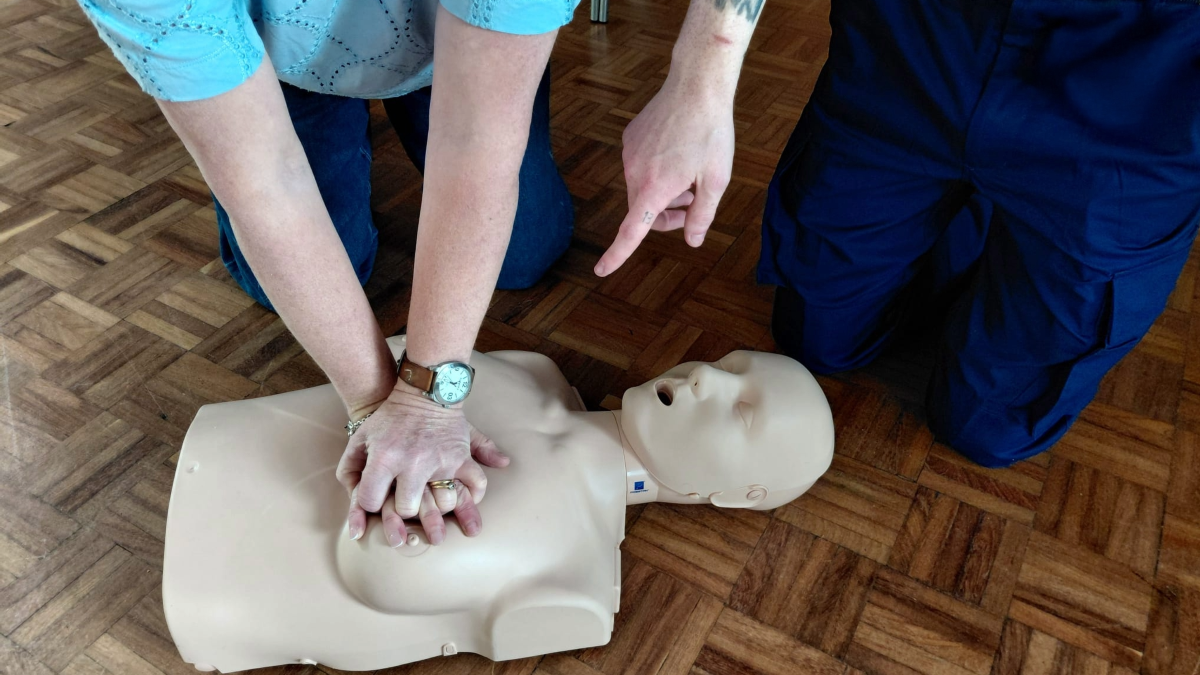
Volunteers teach participants how to conduct effective chest compressions and maintain circulation until emergency services arrive. Practical exercises allow individuals to build confidence in a safe learning environment.
Using a Public Access Defibrillator
Many people feel unsure or anxious about using a defibrillator. The sessions demonstrate how these devices work and provide practical experience using training equipment. Participants learn that defibrillators are designed to be safe and user-friendly.
Understanding the Emergency Response Process
The training also explains what happens when a 999 call is made and how members of the public fit into the overall chain of survival. This helps participants understand the critical role they can play while waiting for ambulance crews to arrive. [swast.nhs.uk]
Benefits to Communities
The work of Community Training Volunteers delivers significant benefits to local communities.
Firstly, the training increases public confidence. Many people are hesitant to intervene during emergencies because they fear doing something wrong. By providing clear guidance and practical experience, volunteers help remove these barriers.
Secondly, the training develops stronger and more resilient communities. When more people possess lifesaving skills, communities become better equipped to respond to emergencies independently during those critical first few minutes.
Thirdly, the programme supports public health and wellbeing by encouraging greater awareness of cardiovascular emergencies and the importance of early intervention.
Finally, the sessions contribute to reducing health inequalities. By offering training free of charge across diverse communities, SWASFT ensures that lifesaving knowledge is accessible to a broader range of people regardless of their background or circumstances. [swast.nhs.uk]
Support and Governance
Community Training Volunteers operate under the governance and support structures of SWASFT. This ensures consistency, quality assurance, and adherence to approved training standards. Volunteers receive training and ongoing support from the Trust, enabling them to deliver accurate and effective educational sessions.
In addition, the South Western Ambulance Charity provides funding support for the programme. While the training itself is delivered free of charge, voluntary donations may be requested during sessions to help the charity reach more communities and provide further lifesaving education opportunities. [swast.nhs.uk]
Conclusion
Community Training Volunteers are a valuable part of SWASFT's commitment to improving patient outcomes and building safer, more resilient communities. Through the delivery of free CPR and defibrillator familiarisation training, they empower members of the public with the knowledge, confidence, and practical skills needed to respond effectively during cardiac arrest emergencies.
Their work helps bridge the gap between the moment an emergency occurs and the arrival of professional medical assistance. By teaching people how to recognise cardiac arrest, perform CPR, use a defibrillator, and understand their role within the emergency response system, Community Training Volunteers make a meaningful contribution to saving lives across the South West. As SWASFT continues to expand community engagement and education, Community Training Volunteers will remain central to the Trust's mission of creating communities that are better prepared, better informed, and more capable of responding when every second counts.